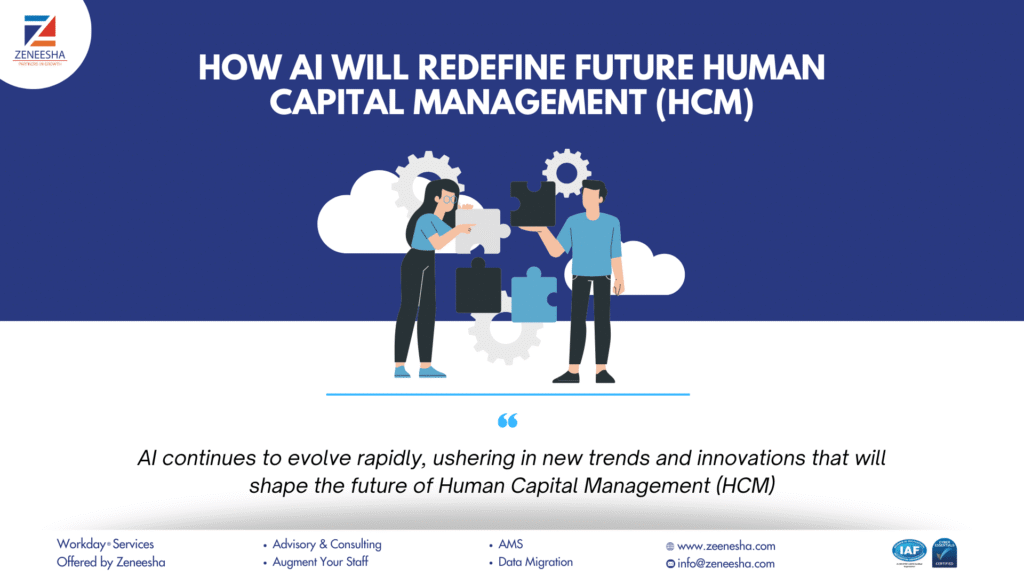
AI continues to evolve rapidly, ushering in new trends and innovations that will shape the future of Human Capital Management (HCM).
Part 2 of this blog series explores these emerging trends and their implications for organizations seeking to leverage AI for strategic HR initiatives.
Emerging Trends in AI-driven HCM
1. AI-powered Employee Engagement Platforms
AI-driven platforms are transforming how organizations measure and enhance employee engagement. These platforms use sentiment analysis to gauge employee satisfaction and sentiment in real time, providing actionable insights to HR teams. By identifying trends and potential issues early on, organizations can proactively address concerns, foster a positive work environment, and improve retention rates.
2. Augmented Analytics for Decision Support
Augmented analytics combines AI and machine learning with data analytics to enhance decision-making processes. In HCM, augmented analytics tools can analyze vast amounts of workforce data to uncover hidden patterns, correlations, and predictive insights. HR leaders can use these insights to make informed decisions about talent acquisition, performance management, succession planning, and workforce optimization.
3. AI-driven Diversity, Equity, and Inclusion (DEI) Initiatives
AI technologies are increasingly being used to support Diversity, Equity, and Inclusion (DEI) efforts within organizations. AI algorithms can analyze recruitment data, performance reviews, and employee surveys to identify potential biases and disparities. By highlighting areas for improvement and recommending targeted interventions, AI helps organizations create more inclusive workplaces and promote diversity across all levels.
4. Continuous Learning and Skill Development
AI-powered learning platforms personalize learning experiences by recommending courses, modules, and resources based on individual employee profiles and career goals. These platforms use adaptive learning technologies to assess learning progress, adjust content delivery in real time, and ensure that employees acquire relevant skills efficiently. Continuous learning initiatives supported by AI enable organizations to stay ahead of industry trends, enhance workforce agility, and drive innovation.
Challenges and Considerations
While the potential benefits of AI in HCM are significant, organizations must navigate several challenges and considerations:
- Data Privacy and Security: Safeguarding sensitive employee data is paramount. Organizations must implement robust data protection measures and comply with regulations such as GDPR and CCPA to mitigate security risks associated with AI-driven HCM solutions.
- Ethical Use of AI: Ensuring fairness and transparency in AI algorithms is critical to avoid biases in recruitment, performance evaluations, and decision-making processes. HR teams should regularly audit AI models, monitor outcomes, and adjust algorithms to minimize unintended consequences.
- Skill Gap and Change Management: AI adoption requires upskilling HR professionals to effectively leverage AI tools and interpret data-driven insights. Organizations must invest in training programs and change management initiatives to support a smooth transition and maximize ROI from AI investments.
Future Landscape of AI-driven HCM
Looking ahead, the future of AI-driven HCM promises continued innovation and transformation. As AI technologies mature, organizations can expect:
- Advanced Predictive Analytics: AI algorithms will evolve to predict workforce trends, anticipate skill gaps, and recommend proactive interventions to optimize workforce planning and talent management strategies.
- Natural Language Processing (NLP) Advancements: NLP capabilities will enable AI-powered chatbots and virtual assistants to handle complex HR inquiries, provide personalized employee support, and streamline communication channels within organizations.
- Integration with Emerging Technologies: AI will integrate with emerging technologies such as augmented reality (AR) and virtual reality (VR) to enhance remote training, onboarding experiences, and virtual collaboration among geographically dispersed teams.
Conclusion AI is revolutionizing Human Capital Management by enabling organizations to make data-driven decisions, enhance employee experiences, and drive organizational performance. As AI technologies continue to evolve, HR leaders must embrace innovation, prioritize ethical considerations, and invest in the right talent and technology partnerships to unlock AI’s full potential in shaping the future of work. The transformative impact of AI on HCM extends beyond automation and efficiency gains—it empowers organizations to create inclusive workplaces, foster continuous learning cultures, and adapt to evolving business landscapes. By embracing AI-driven innovation responsibly, organizations can position themselves at the forefront of the digital revolution, driving sustainable growth, and achieving long-term success in the dynamic global marketplace.