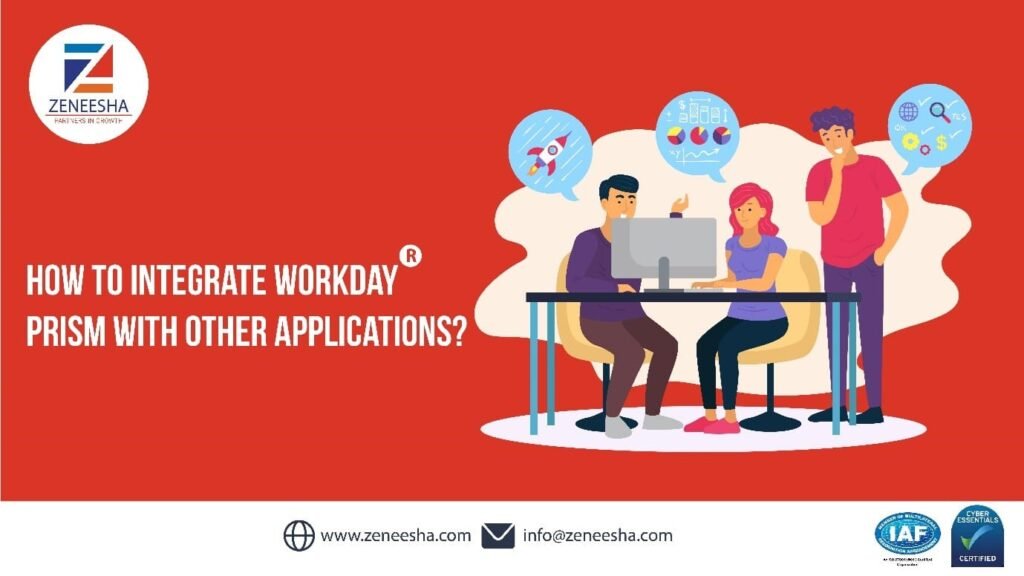
Workday, a top Human Capital Management (HCM) software supplier, developed the data analytics tool called Workday Prism.
It enables businesses to combine, examine, and save data from numerous sources in their Workday system.
Leaders will be able to effectively make data-driven decisions with the help of the technology, which is intended to provide advanced analytics and insights into corporate operations.
Businesses can use Workday Prism to combine data from many systems, including those developed by third parties, to get a complete picture of their organization.
The Necessity of Workday Prism with Other Programs is Crucial
For organizations, integrating Workday Prism with other programs has several advantages. First, it allows corporate executives to compile intelligent reports by analyzing various data sources from their systems.
The tool’s versatile data modeling framework and user-friendly drag-and-drop features make it easy for users to develop a unique data model that can satisfy their particular business requirements.
Second, Workday Prism offers consumers a single source of truth that enables them to obtain accurate data in real-time from various sources.
As a result, the program minimizes the need for human data entry and guards against the emergence of inconsistencies by ensuring data consistency across all systems.
Business executives can act quickly with real-time data and analytics at their fingertips.
Thirdly, Workday Prism interfaces with external programs, enabling businesses to use their complete technological stack effectively.
This allows the company to glean insights from many data sources and applications, like finance, CRM, and HR, and to present a complete picture of their operations.
Additionally, Workday Prism enables businesses to create unique data integrations that enhance decision-making, automate tedious tasks, and enhance overall business performance.
Understanding Workday Prism Integration
Data management has evolved into a crucial component of organizational success in the fast-paced commercial climate of today.
Organizations require access to accurate and current data to make wise decisions, spot areas for cost reductions, and spur revenue growth.
Nevertheless, handling data that comes from numerous sources can be difficult. Workday Prism can be helpful in this situation.
A cloud-based analytics tool, Workday Prism, enables businesses to combine data from diverse sources and acquire insightful information.
It allows organizations to link, manage, and analyze data from many platforms, including Workday and third-party applications.
With its extensive integration possibilities, Workday Prism is crucial for businesses wishing to automate their data management procedures.
Businesses that wish to get a complete picture of their data must integrate Workday Prism with other programs.
By linking diverse systems, organizations can get insights that can result in better decision-making and more excellent business outcomes.
One way to gain insights into consumer behavior, preferences, and trends is to integrate Workday Prism with a customer relationship management (CRM) system.
Organizations can use this information to better adjust their marketing and sales efforts to the needs of their target audiences.
Additional beneficial insights into financial performance, cash flow, and profitability can be obtained by integrating Workday Prism with a financial management system.
Organizations can use this information to find cost opportunities- and revenue-saving measures. Organizations can increase their bottom line by finding cost savings and revenue growth opportunities.
Benefits of Integrating Workday Prism with Other Applications
It first increases data accuracy. Data consistency and up-to-dateness across all applications are ensured by integrating numerous systems. As a result, businesses can base their judgments on factually sound information.
Better decision-making is also made possible by combining Workday Prism with other applications. Organizations can make better judgments when accessing extensive data from several sources.
Third, system integration lessens the need for human data entry and saves time and labor. As a result, workers are free to concentrate on more important duties like data analysis and decision-making.
Finally, cost reductions may result from integrating Workday Prism with other programs. Organizations can increase their bottom line by finding cost savings and revenue growth opportunities.
Integration Steps of Workday Prism with Other Applications
To guarantee a successful integration process, preparation is essential. The first step is finding the applications that will be integrated with Workday Prism.
This entails evaluating the organization’s data requirements and selecting the applications that will offer the most insightful data.
The evaluation of compatibility and technical requirements comes next. With this, assessing the applications’ compatibility with Workday Prism and ensuring they satisfy the technical requirements for integration.
Last but not least, careful preparation of the integration process is essential to successful integration. This entails creating a plan specifying the apps’ integration procedures, defining roles and duties, and establishing deadlines.
Best Practices for Workday Prism Integration
Several best practices should be followed to guarantee a successful and secure integration while connecting Workday Prism with other apps. These procedures involve putting security measures in place, keeping track of and resolving integration problems, and documenting the integration procedure.
Putting Security Measures in Place
When connecting Workday Prism with other apps, security should come first. Making sure that private information is protected throughout integration is crucial. The following are some pointers for putting security precautions into Workday Prism integration:
Set up access controls
Access restrictions should be set up to guarantee that only authorized users can access Workday Prism data. According to an employee’s role and job description, functions should be assigned. By utilizing Workday security groups, this is possible.
Data encoding
Sensitive data should be protected during transmission through encryption. When sending data between Workday and other applications, SSL or TLS protocols should be used to encrypt the information.
Create Guidelines for Data Governance
Data governance standards should be set to guarantee data security, quality, and accuracy. Data management, identifying ownership, and enforcing compliance are all covered by data governance rules and practices.
Monitoring and Troubleshooting Integration Issues
Monitoring the integration process is crucial when connecting Workday Prism with other programs to guarantee accurate and effective data transmission. Here are some pointers for tracking and resolving integration problems:
Utilise Monitoring Resources
Monitoring tools can be employed to track integration performance, spot anomalies, and address difficulties. Additionally, these technologies can produce reports that give complete details regarding integration activity.
Regularly Review Logs
Logs should be routinely examined to spot and fix issues. Records can be used to spot trends pointing to an integration issue.
Execute Tests
To make sure the integration keeps working correctly, testing needs to be done frequently. Testing can be carried out manually or automatically using programs like Selenium.
Documenting the Integration Process
The integration process can be made successful and readily updated or scaled in the future by being well-documented. Additionally, documentation can aid in problem detection and resolution. Following are some guidelines for recording the integration process:
Make a Thorough Plan
The integration process should start with the creation of a thorough plan. The plan should outline the deadlines, objectives, and tasks that must be completed.
Take Detailed Notes
The integration procedure should be documented in great detail. This includes details on integration-related activities, issues, and fixes.
Create Standards for Documentation
Establishing documentation standards will ensure organization and consistency. Naming conventions, formatting specifications, and document storage practices are all examples of documentation standards.
Workday Prism integration may be made more secure from beginning to end with faster troubleshooting, error resolution, and smoother scaling and adjustment.
Conclusion
Organizations that wish to obtain a comprehensive picture of their data and enhance business outcomes must integrate Workday Prism with other applications.
Businesses can improve their data management procedures, make better judgments, and pinpoint opportunities for cost reductions and revenue development by linking numerous systems.
To guarantee a successful integration process, preparation is essential. It entails determining the apps that need to be integrated, evaluating technological requirements and compatibility, and organizing the integration process.
Integrating Workday Prism into an organization’s processes enables it to acquire insightful data to help it succeed commercially.