Payroll processing refers to the series of steps and tasks involved in calculating, managing, and disbursing employee compensation, including wages, salaries, bonuses, deductions, and taxes. It is a critical aspect of human resource management and finance within organizations. The process ensures that employees are accurately and promptly paid for their work while complying with legal and regulatory requirements.
Importance of payroll in an organisation
Payroll is a fundamental function within an organization that holds significant importance for both employees and the business as a whole. Here are some key reasons why payroll is crucial:
- Employee Compensation: Payroll ensures that employees are accurately and promptly compensated for their work. Timely and correct payments are essential to maintain employee satisfaction and motivation.
- Legal and Regulatory Compliance: Payroll processing involves adhering to various legal and regulatory requirements, such as tax withholdings, Social Security contributions, and labor laws. Non-compliance can result in penalties and legal issues for the organization.
- Employee Trust and Engagement: Accurate and transparent payroll processing fosters trust among employees. When employees receive their rightful pay on time and see that deductions are handled accurately, it enhances their confidence in the organization.
- Motivation and Performance: Employees who are satisfied with their compensation are generally more motivated and productive. A smoothly functioning payroll system supports employee morale and job satisfaction.
- Comprehensive Record-Keeping: Payroll generates records of each employee’s compensation, deductions, and taxes. These records are crucial for auditing, financial reporting, and providing documentation in case of legal disputes.
- Budgeting and Financial Planning: Payroll expenses are a significant portion of an organization’s budget. Accurate payroll data aids in financial planning, forecasting, and cost management.
- Employee Benefits and Deductions: Payroll processes manage employee benefits such as health insurance, retirement contributions, and other deductions. Accurate handling of these elements is essential to ensure that employees receive the benefits they are entitled to.
- Tax Compliance: Proper tax withholding and reporting are essential to prevent legal issues with tax authorities. A reliable payroll system ensures that taxes are accurately calculated and remitted to the appropriate government agencies.
- Employee Well-Being: Timely and accurate payroll processing helps reduce financial stress among employees, as they can rely on receiving their pay on schedule. This positively impacts employee well-being and work-life balance.
Key steps involved in payroll processing include:
- Collecting Time and Attendance Data: Gathering accurate records of employee work hours, overtime, leave, and other attendance-related information is crucial for calculating accurate payments.
- Calculating Gross Wages: Based on time and attendance data, payroll personnel calculate each employee’s gross wages, which include regular pay, overtime pay, and any additional earnings such as bonuses or commissions.
- Deducting Taxes and Other Withholdings: Payroll processors deduct applicable federal, state, and local taxes from employees’ gross wages. Other deductions, such as Social Security, Medicare contributions, health insurance premiums, retirement contributions, and garnishments, are also subtracted.
- Net Pay Calculation: After accounting for deductions, the net pay (take-home pay) for each employee is calculated. Net pay is the amount that will be directly deposited into the employee’s bank account or provided as a physical paycheck.
- Generating Pay Statements: Payroll processing involves creating pay stubs or statements for employees, detailing the breakdown of their earnings, deductions, taxes, and net pay.
- Issuing Payments: Once the calculations are complete, payments are issued to employees through direct deposit, physical checks, or other payment methods. The timing of payments is typically determined by the organization’s pay schedule, such as biweekly or monthly.
- Filing Tax Forms: Payroll processing includes the responsibility of preparing and filing various tax forms with relevant government agencies. This includes W-2 forms for employees and relevant tax filings for the organization.
- Compliance and Reporting: Accurate record-keeping and compliance with labor laws, tax regulations, and other legal requirements are crucial during payroll processing. Timely submission of reports to relevant authorities is necessary to avoid penalties.
- Auditing and Reconciliation: Regular audits and reconciliations ensure that the payroll calculations are accurate and that there are no discrepancies between the financial records and the actual payments made.
- Adapting to Changes: Payroll processing teams need to adapt to changes in employee status (new hires, terminations, promotions), changes in tax laws, and updates to employee benefits or deductions.
Payroll Processing with Workday
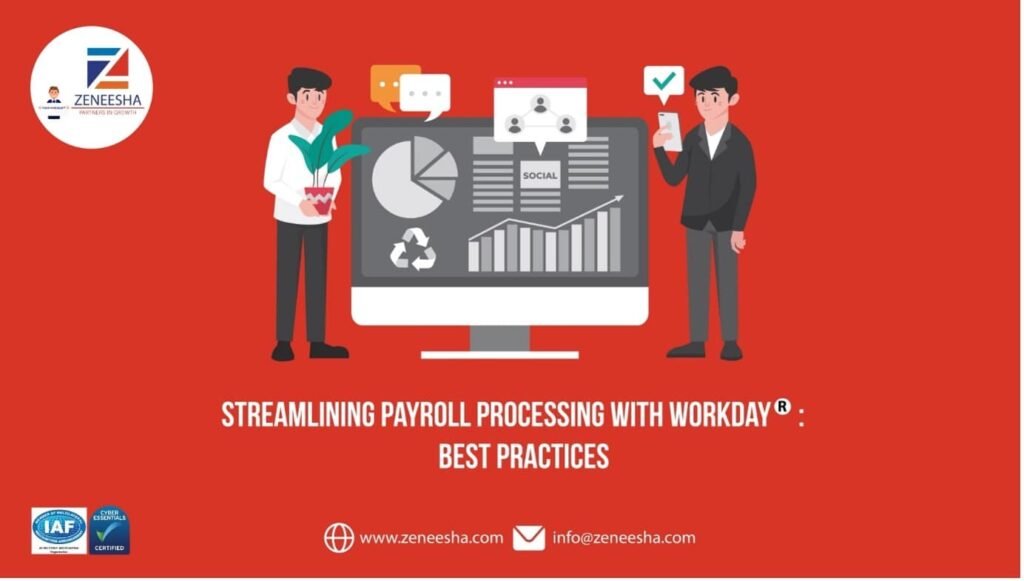
Leveraging Workday’s comprehensive capabilities can significantly enhance the efficiency and accuracy of the payroll process. Here’s a more elaborate exploration of the best practices for streamlining payroll processing with Workday:
1. Centralize Data and Processes: Workday’s core strength is its ability to centralize various HR and financial data within a single platform. For streamlined payroll processing, ensure that all payroll-related data, from employee profiles to benefits and deductions, is stored in a unified system. This minimizes data duplication, reduces the chances of errors resulting from inconsistent data, and ensures that all departments are working with the same up-to-date information. Centralization also enables better audit trails and compliance monitoring.
2. Automate Time Tracking and Attendance: Workday’s Time Tracking and Attendance features allow you to automate the collection of work hours, overtime, and leave. By integrating this data directly into the payroll processing, you eliminate the need for manual data entry and significantly reduce the potential for human errors. This automation also ensures that payroll calculations are based on accurate, real-time data, improving the overall accuracy of compensation.
3. Customize Payroll Rules and Calculations: Configure Workday to reflect your organization’s unique payroll rules and policies. This includes setting up different pay rates, overtime calculations, bonuses, and benefit deductions. By customizing the system to align with your specific requirements, you ensure that the payroll calculations accurately mirror your organization’s compensation structure. Regularly review and update these configurations to adapt to changes in labor laws, tax regulations, and company policies.
4. Implement Self-Service Portals: Workday offers self-service portals that empower employees to access their pay statements, tax forms, and benefit information. By enabling employees to manage their own payroll-related tasks, such as updating personal information or accessing pay statements, you reduce the administrative burden on HR teams. This self-service approach not only enhances employee engagement but also improves data accuracy by reducing manual data entry.
5. Integrate with Time and Attendance Systems: Integrate Workday with your organization’s time and attendance tracking systems. This integration ensures that accurate and up-to-date attendance data flows seamlessly into the payroll process. It eliminates the need for manual data transfer, reducing the risk of errors and discrepancies in payroll calculations. The real-time integration also allows for better compliance with labor laws, as overtime and leave calculations are automatically aligned with actual attendance data.
6. Ensure Tax Compliance: Workday’s tax compliance features are designed to automate accurate tax calculations and withholdings based on federal, state, and local regulations. By configuring the tax settings correctly and keeping tax tables up to date, you ensure that the correct amount of taxes is deducted from employees’ paychecks. This minimizes the risk of errors and potential legal issues related to tax compliance.
7. Implement Automated Approvals: Configure automated approval workflows within Workday for various payroll-related processes. This includes approvals for time entries, changes to compensation, and deductions. Automation streamlines the approval process, reduces processing delays, and ensures that all payroll-related changes go through the appropriate channels for validation, enhancing data accuracy and compliance.
8. Regularly Audit and Reconcile: Regular audits and reconciliations of payroll data are essential to identify any discrepancies or errors. Regularly review payroll reports, reconcile payroll data with financial records, and address any discrepancies promptly. This proactive approach ensures that payroll data remains accurate and consistent, enhancing trust in the payroll process.
9. Stay Informed About Updates: Workday regularly releases updates and enhancements to its platform. Stay informed about these updates, particularly those related to payroll processing. Evaluate how new features and functionalities can improve efficiency, accuracy, and compliance within your payroll processes. Implement relevant updates to ensure that your payroll system remains current and aligned with industry best practices.
10. Invest in Training and Support: Providing comprehensive training to your HR and payroll teams on effectively using Workday’s payroll features is crucial. Ensure that your teams are well-versed in the platform’s functionalities, configurations, and best practices. Additionally, have access to Workday experts who can guide you through complex scenarios and provide assistance when needed. This investment in training and support ensures that your organization can maximize the benefits of Workday for streamlined payroll processing. In conclusion, effective payroll processing ensures that employees receive their rightful compensation on time and that organizations remain in compliance with legal and regulatory obligations. It demands accuracy, attention to detail, and a robust understanding of payroll-related laws and regulations. Many organizations use specialized software, like Workday, to streamline and automate the payroll processing process. By incorporating Workday’s best practices, organizations can not only streamline payroll processes with Workday but also create a more efficient, accurate, and compliant payroll system that positively impacts both employees and the organization as a whole.