It would not be an understatement to state that supply chains, which transmit products and services across borders, are what fuel today’s global economy.
And, a crucial element of sustainability development for businesses is a sustainable supply chain.
Global supply chains have made it possible for people to access goods and services from all over the world, but they have also had a significant impact on the environment. Let’s take a look a few numbers for some context.
- The size of the global CPG market is anticipated to rise from €1,602 billion in 2020 to an astounding €1,913 billion by 2026.
- According to McKinsey, CPG businesses are responsible for almost 33 billion tonnes of CO2 emissions into the environment, or 66% of all global emissions put together.
- The same report states that the supply chains of CPG companies account for more than 80% of greenhouse gas emissions and more than 90% of the effects on air, land, water, biodiversity, and geological resources.
Organizations may minimize their impact on the environment and get significant benefits by incorporating sustainability into their supply chains.
Additionally, with consumer and stakeholder pressure to improve sustainability credentials and lower the carbon footprint of their supply chains, many organizations are feeling the effects of rising environmental concerns, the UK government’s commitment to achieve net-zero by 2050, and pressure to meet rising customer service expectations. 1/3rd of consumers admits to avoiding making purchases from specific businesses owing to ethical and ecological concerns, and 73% of consumers are willing to adjust their e-commerce behaviors to lessen their environmental effect.
How Important Is Sustainability In Supply Chains?
Across the entire supply chain cycle, from product design and development to material selection, manufacturing, packaging, transportation, warehousing, and distribution to consumption, return, and disposal, a sustainable supply chain ensures lower environmental impact, better assurance of human rights, and ethical work practices. It is evident that, for the majority of firms, supply chains have a significantly higher impact on the environment and society than any other aspect of their operations.
Furthermore, statistics show that by 2025, almost 2 billion individuals will enter the global consumption class who are more conscious of sustainability, are interested in it, and want to support sustainable products and services. According to a Cone Communications CSR Study, up to 88% of respondents are more likely to be loyal to companies that display high social and environmental responsibility. Sustainable purchasing is becoming more of a personal obligation and less of a choice.
So, How To Build A Sustainable Supply Chain?
1. Perform a comprehensive supply chain analysis
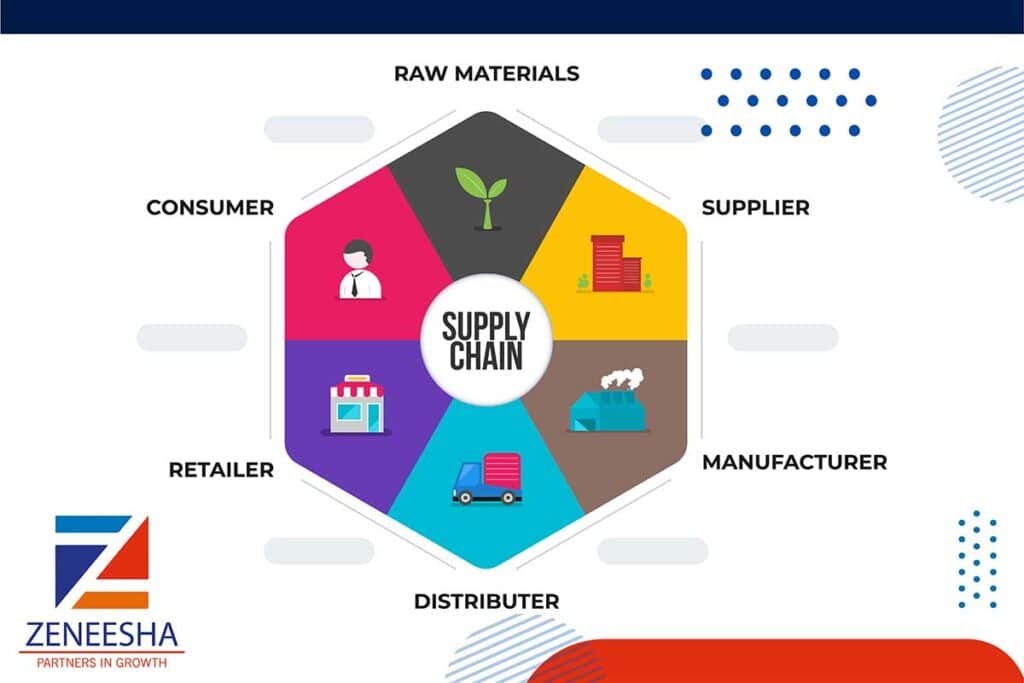
Having a thorough awareness of the present ground realities of the firm should be the first stage in any change effort. The first step in creating a sustainable supply chain is to track the movement of products from the producer to the customer. Paying attention to resource use, wasteful behaviour, and process efficiency are all necessary components of a sustainability focus.
The business will be able to track how labour and resources are used at each stage of the supply chain and identify specific areas of improvement with the help of sustainability-focused mapping.
2. Talk to suppliers

All of the network’s suppliers must embrace sustainable practices for the sustainable supply chain to succeed. Businesses must interact with their suppliers to promote the adoption of sustainable practices. To achieve this, they must establish compliance criteria and performance indicators, as well as carry out recurring audits.
Businesses should collaborate with their suppliers to implement new procedures that are in line with the group’s sustainability objectives. The following actions could also be used to engage suppliers continuously and consistently:
– Offering training courses on sustainable living techniques
– Setting goals for sustainable supply chain operations and communicating them
– Establishing initiatives to recognize and reward sustainability accomplishments
3. Specify objectives and measurements.
Determining metrics and KPIs comes next after establishing the sustainability focus areas. Benchmarking in terms of sustainability is fundamental for any meaningful KPI determination. Benchmarking enables the establishment of KPIs/KRAs that push the company to pursue best-in-class performance and identifies areas for development.
After the company’s sustainability criteria have been created, put in place a governance system to track and keep an eye on the development of sustainability initiatives. This could be accomplished by measuring the amount of revenue, profit, waste, etc. throughout the time frame in question. KPI/KRA monitoring on a regular basis aid in the business’s ability to pinpoint weak links in the supply chain.
4. Leverage technology
Due to their scale and complexity, global supply chains require the use of technology to pinpoint areas for improvement and present opportunities. For instance, inventory management software technologies can be utilized to enhance the procurement process and reduce inventory carrying expenses.
Getting data on the performance of a company’s hundreds of top suppliers can be a difficult undertaking. In this case, cloud-based software tools can make it easier to acquire real-time data for assessing supply chain performance. Businesses may find the most cost-effective and environmentally friendly shipping routes using data analytics and AI/ML-powered solutions. In order to improve process efficiency through resource sharing across supply chain partners, for example, data can be used to identify the issues of sustainable supply chain management.
5. Optimize current fleets

Likewise, fleets can be optimized to lower the associated carbon emissions. The best ways to do this are through review, planning, and utilization. Operators need to keep an eye on how often vehicles are being filled, how many miles they are travelling empty, and how efficiently they are being used. Regularly reviewing these elements can help reduce fleet size and remove unneeded vehicles off the road.
Businesses should also invest in innovative technology that can lower vehicle use and carbon emissions when they buy new vehicles. In-cab electronics and telematics to inform and encourage the best driving style can increase fuel economy by 10%.
Concluding Thoughts…
Improving supply chain sustainability will not be easy, and it will be significantly impacted by the external issues the UK will be dealing with in 2022. However, concentrating on a company’s vehicles—whether they are those used by employees or those used to ship goods across the nation—is likely to have a significant impact on the carbon footprint of the organization, making it a useful area to focus on.
To stop the tide of climate change, a multi-modal, team-based strategy will be required. We all have a part to play in bringing global emissions down to a sustainable level as required by the Paris Agreements, from heavy industry to general consumption. A common goal can still be achieved if we all work together, even though climate change may pose an existential threat to individuals from all walks of life. With industry-wide support, green logistics techniques are easily attainable. This covers logistics, supply chain management, and third-party logistics providers. We can all benefit from sustainable practices if we work together.
If you’re interested in learning more about building a sustainable supply chain, take the first step by reading our comprehensive guide. Discover the benefits of sustainable practices and learn how to implement them in your business today. Start building a more resilient and responsible supply chain that will benefit both your organization and the planet.