According to Gartner, about 25% of healthcare supply chain leaders don’t have a strategic plan, and many have not refreshed their strategy for the coming year.
Healthcare supply chain strategy is necessary right now. The COVID-19 pandemic brought to light the need of supply chain management in providing high-quality patient care and protecting the safety of healthcare personnel. Even yet, most CEOs are ignorant that the cost of supporting the entire supply chain accounts for 37.3% of the price of providing patient care.
For the supply chain to become more robust, to support a digital supply chain, and to coincide with an increase in virtual care, the best healthcare supply chain plans involve business leaders at the fore. With various goals such as cutting healthcare costs and improving the overall patient outcomes, healthcare supply chain management is of utmost importance right now. But what exactly does that entail?
What Is Healthcare Supply Chain Management?
Supply chain management (SCM) is the centralized management of all the processes in the business. This involves the procurement of raw materials to the manufacturing to the delivery of the final product to the customers. Central management of the entire supply chain has allowed businesses to drastically reduce costs and the overwhelming reliance of middlemen, allowing for better control and faster delivery times.
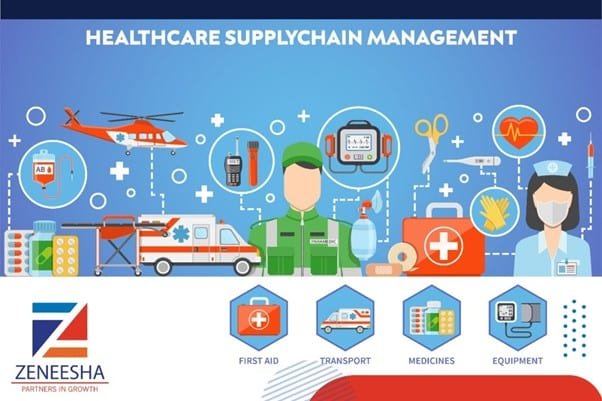
In the healthcare sector, professionals need a number of interconnected procedures to carry out their daily activities, including the management of supplies, the acquisition of resources, and the procurement of resources. Every component of the medical supply chain has an impact on total costs, patient outcomes, and the effectiveness of services.
Healthcare supply chains involve the flow of many different types of products. The production phase involves production of medical supplies and devices, and pharmaceuticals. These products are then sent to distributers or wholesalers, and then are subsequently bought by hospitals or other healthcare institutions, where the goods are stocked and made ready for patients.
The Role Of Supply Chain Management In Healthcare
Because the final product in intended for healthcare, the timely procurement and delivery of products is of utmost importance. Lives could be lost in the case of any delays or mismanagement. Supply chain management allows for better optimization of these complex supply chains within the healthcare industry.
· Cost Reduction
Reduction of costs within the healthcare industry is a rising concern, but reducing cost while also improving the quality of healthcare is a challenge. By centrally controlling the many processes within the healthcare SCM, healthcare systems can use the data collected in various stages to cut out extra costs that are otherwise unnecessary.
· Waste reduction
Likewise, waste reduction is also a common outcome of supply chain management in healthcare. Since the various teams involved have a visibility of the product from the start of the manufacturing process to patient use, it can allow for cutting down on unnecessary waste generation.
· Faster healthcare delivery
One of the biggest concerns with healthcare is providing the right services and products to the patients in need on time. Supply chain management allows for better tracking of products along the supply chain and, hence, ensure that products are delivered and ready for the use of patients.
· Proper inventory management
The covid-19 pandemic showed us that most of us were not prepared for a global emergency of this scale. While things have eased quite a bit, it was a good lesson in showcasing that proper inventory management is an absolute necessity. Ensuring that there are sufficient goods in store and taking pre-emptive measures to overcome any major disruptions is key in proper SCM.
· Provide better patient care
Utilization and clinical outcome data can provide supply chain teams and healthcare professionals with many opportunities to improve patient outcomes. By connecting clinical data to product supply management can enable the teams involved to provide the most cost-effective healthcare choices. Furthermore, patient requirements can also be easily met with proper communication channels in a more centralized supply chain management.
Complexity Of Supply Chains In Healthcare
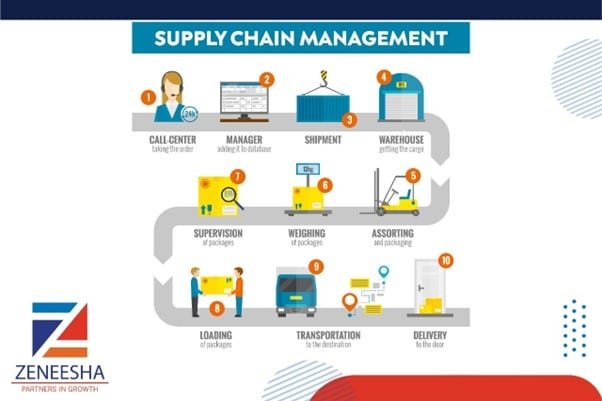
The healthcare industry is a massive one, and one of the most important ones in a civilized world. Most people are not aware of the sheer number of moving parts within the healthcare industry. All sectors that aim to provide goods and services for the treatment of patients fall into this, including things such as medicines, syringes, gloves, stationary, and computers and medical equipment. The central management of the supply chain involved in manufacturing and delivering these products and services to the patients is what healthcare SCM is all about. And, as you can imagine, it is a massive endeavour.
The complexity of the supply chain within the healthcare industry isn’t limited to just the various steps involved. External agents, such as the participation of governmental organizations, and the involvement of regulatory agencies and insurance companies can add to the complexity. Each stakeholder within the industry also have different motives that they need to protect. This involves everything from pharmaceutical companies wanting to maximize profits to healthcare institutions wanting to improve healthcare outcomes. Sometimes these goals may not align and cause delays and added complexities to the system.
The Future Of Healthcare Supply Chain Management
In the digital age, collecting data has become easier and a lot more efficient. With technologies developing at a break-neck speeds and healthcare quality and delivery times improving drastically, supply chain management teams within the healthcare industry have to focus on maintaining their roles, while ensuring that future events like the global covid-19 pandemic don’t disrupt the chain. Understanding and improving the healthcare supply chain can certainly help each part within the system to achieve their goals better and faster along the lines.
If you’re interested in learning more about the critical role supply chain management plays in healthcare, we invite you to read our article. By implementing effective supply chain strategies, healthcare organizations can improve patient care, reduce costs, and increase efficiency. Stay informed and ahead of the game by exploring our other informative articles on the topic.