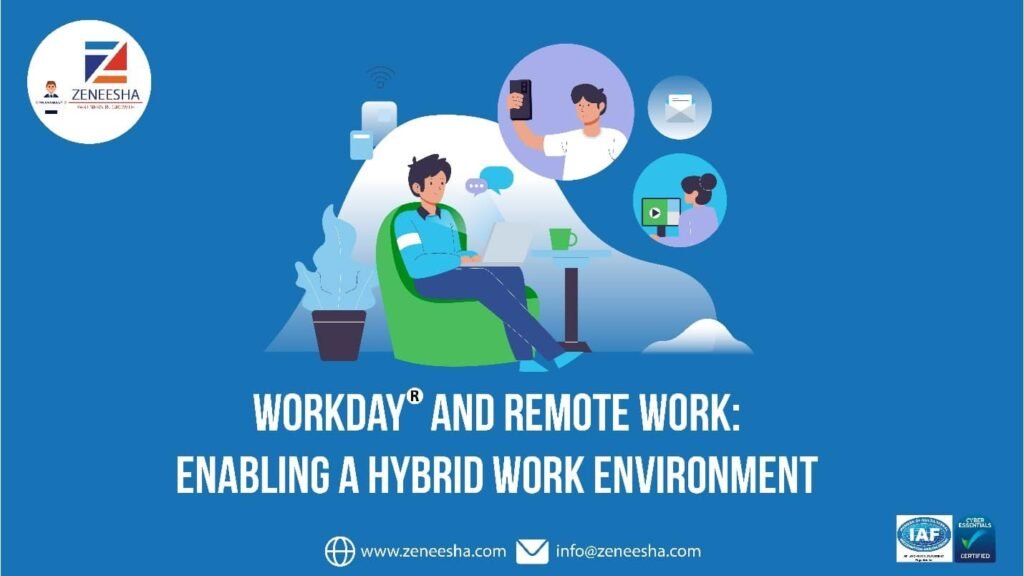
A hybrid work environment is a flexible work arrangement combining remote work and on-site work in a single workforce. In a hybrid work model, employees have the flexibility to split their working hours between working from home or other remote locations and coming into the physical office or workplace. This approach allows organizations to balance remote work’s benefits, such as flexibility and reduced commuting time, and the advantages of in-person collaboration, team-building, and face-to-face interactions.
In a hybrid work environment, employees may have designated days or times when they are expected to be in the office while having the freedom to work remotely for the remaining hours or days. Organizations typically provide the necessary technology and tools to support seamless communication and collaboration between remote and on-site employees.
Hybrid work has gained popularity due to its ability to cater to diverse employee preferences and needs, promote work-life balance, and enhance productivity and employee engagement. It also allows organizations to tap into talent beyond their geographical boundaries and reduce their office space requirements. However, managing a hybrid work environment effectively requires thoughtful planning, clear communication, and the implementation of supportive policies and practices that ensure a cohesive and inclusive work culture for all employees, regardless of their work location.
Necessity for hybrid/remote work environment
The necessity for a hybrid or remote work environment has become evident in response to various factors and changing dynamics in the modern workplace. Some of the key reasons why a hybrid or remote work model is increasingly essential include:
- Flexibility and Work-Life Balance: A hybrid or remote work environment allows employees to have more control over their work schedules, enabling them to balance their professional and personal commitments effectively. This flexibility can lead to reduced stress and improved overall well-being.
- Employee Productivity and Engagement: Studies have shown that many employees are more productive when working remotely or in a hybrid setup. The reduced distractions and commuting time can lead to higher levels of focus, motivation, and job satisfaction, ultimately benefiting the organization’s performance.
- Talent Attraction and Retention: Offering a hybrid or remote work option enhances an organization’s appeal to a broader talent pool. It allows companies to recruit top talent from different geographical locations and retain valuable employees who value flexible work arrangements.
- Business Continuity: A hybrid or remote work environment provides a level of resilience to unexpected events like natural disasters or public health crises. Organizations with established remote work capabilities can continue operations smoothly during disruptions.
- Cost Savings: For both employees and employers, a hybrid or remote work environment can lead to cost savings. Employees can save on commuting expenses and time, while organizations can reduce office space costs and associated overheads.
- Sustainability and Environmental Impact: Reducing the need for daily commuting can have a positive impact on the environment by decreasing greenhouse gas emissions and traffic congestion.
- Inclusive Workforce: A hybrid or remote work environment can promote inclusivity by accommodating employees with various needs, such as those with disabilities or caregiving responsibilities.
- Technology Advancements: The advancement of technology and digital collaboration tools has made it easier for teams to collaborate effectively, regardless of their physical location.
- Global Collaboration: A hybrid or remote work environment facilitates collaboration among geographically dispersed teams, promoting diverse perspectives and expertise.
- Employee Well-Being: A hybrid or remote work environment can improve mental health and reduce burnout by providing employees with better work-life integration and more control over their work environment.
- Global Talent Access: A hybrid or remote work model enables organizations to tap into a diverse and global talent pool, allowing them to hire the best candidates irrespective of their physical location. This expands the talent pipeline and fosters a more inclusive and diverse workforce.
- Reduced Commuting Stress: Employees in a hybrid or remote work environment experience reduced commuting stress, which can positively impact their mental well-being and energy levels, leading to higher job satisfaction and retention.
- Disaster Preparedness: Remote work options provide a contingency plan during emergencies, ensuring business continuity even in times of natural disasters, pandemics, or other disruptions.
- Increased Employee Autonomy: A hybrid or remote work environment empowers employees to manage their work in a way that best suits their individual work styles, increasing their sense of autonomy and ownership over their work.
- Improved Employee Health: Flexible work arrangements allow employees to create healthier workspaces at home and choose schedules that align with their natural circadian rhythms, promoting overall well-being.
- Workforce Well-Being and Mental Health: A hybrid or remote work environment allows employees to better manage work-related stress, leading to improved mental health and reduced burnout.
How Workday enables a hybrid work environment
Workday, as a leading cloud-based Human Capital Management (HCM) platform, plays a crucial role in enabling a hybrid work environment by providing the necessary tools and functionalities to support flexible work arrangements. Here’s how Workday facilitates a seamless hybrid work model:
- Remote Access and Collaboration: Workday’s cloud-based architecture allows employees to access the platform from any location with an internet connection. This remote accessibility enables employees to perform essential HR tasks, such as time tracking, leave requests, and benefits enrollment, regardless of their physical location.
- Mobile App: Workday’s mobile app offers a user-friendly interface that empowers employees to manage HR-related tasks on their smartphones or tablets. This enables them to stay connected and productive while working remotely or on the move.
- Communication and Feedback: Workday’s integrated communication and feedback features promote effective collaboration among team members, whether they are working in the office or remotely. Employees can communicate, share updates, and provide feedback within the platform, fostering a sense of unity among the hybrid workforce.
- Self-Service Tools: Workday’s self-service tools allow employees to update personal information, view pay statements, and manage benefits from anywhere. These self-service options reduce the administrative burden for HR teams and empower employees to take ownership of their HR-related tasks.
- Remote Onboarding and Learning: Workday supports remote onboarding, making it easier for new employees to join the organization seamlessly. Additionally, its Learning Management System (LMS) allows employees to access training and development programs online, enhancing skills and knowledge regardless of their work location.
- Performance Management: Workday’s performance management features enable managers to conduct performance evaluations, set goals, and provide feedback to employees, regardless of whether they are working remotely or on-site.
- Talent Management and Succession Planning: Workday’s talent management capabilities facilitate identifying and nurturing top talent in the organization, ensuring a smooth succession planning process, even in a hybrid work environment.
- Analytics and Reporting: Workday’s robust analytics and reporting features provide HR leaders with insights into the workforce’s performance, productivity, and engagement, aiding data-driven decision-making, irrespective of employees’ physical work locations.
- Compliance and Security: Workday ensures data privacy and compliance with security measures that safeguard sensitive employee information, regardless of where the workforce operates.
- Workplace Safety and Health: Workday can be used to manage workforce health and safety measures, ensuring employees’ well-being, whether they are working on-site or remotely.
- Flexible Work Hours: Workday allows employees to manage their work schedules and track their time, accommodating flexible work hours for both remote and on-site employees. This flexibility promotes work-life balance and supports individual preferences.
- Resource Planning: Workday’s workforce planning and scheduling features help organizations optimize resource allocation based on employee availability and preferences. This enables better coordination and collaboration among hybrid teams.
- Task Management: Workday’s task management tools enable managers to assign tasks, track progress, and set deadlines for employees, ensuring that remote and on-site team members stay aligned and productive.
- Transparent Performance Metrics: Workday provides transparent access to performance metrics, allowing employees to track their performance goals and achievements, and fostering accountability and motivation, regardless of their work location.
- Virtual Meetings Integration: Workday integrates with various virtual meeting tools, allowing employees to schedule, join, and conduct virtual meetings seamlessly. This integration enhances communication and collaboration within hybrid teams.
- Data Security and Privacy: Workday’s robust security measures ensure the protection of sensitive employee data, even in a dispersed work environment. This instils confidence in employees and maintains data privacy compliance.
- Employee Surveys and Feedback: Workday’s survey capabilities enable organizations to gather feedback from employees on various aspects of the work environment, helping leaders understand employees’ sentiments and address concerns in a hybrid setting.
- Multilingual Support: Workday offers multilingual support, enabling global organizations to provide consistent HR services to employees working in different regions and languages.
In conclusion, by providing a unified and cloud-based HR platform, Workday enables organizations to seamlessly manage their hybrid workforces. The platform’s accessibility, mobile app, collaboration tools, and self-service features empower employees to work efficiently from any location, fostering a flexible and productive work environment. Workday’s support for remote onboarding, performance management, talent development, and compliance ensures that HR processes remain consistent and efficient, regardless of the hybrid work arrangement.