The term “workforce” refers to the total number of people employed or available for employment within a particular organization, industry, country, or economy. It encompasses individuals who are actively engaged in various forms of work, including full-time, part-time, temporary, and contract positions. The workforce includes employees at all levels, from entry-level positions to executive roles, and across various departments and functions.
Key points to understand about the workforce:
- Composition: The workforce is made up of individuals with diverse skills, backgrounds, experiences, and roles. It includes both skilled and unskilled workers, professionals, managers, and support staff.
- Labor Market: The availability of a skilled and qualified workforce is crucial for economic development and business growth. Employers seek to attract, retain, and develop talented individuals to ensure the success of their organizations.
- Human Capital: The workforce represents the human capital of an organization or society. Human capital refers to the skills, knowledge, abilities, and expertise that individuals bring to their work.
- Labor Force Participation: Labor force participation rate is a measure that indicates the proportion of the working-age population (usually defined as individuals aged 15 to 64) who are either employed or actively seeking employment.
- Employment Trends: Workforce trends include aspects such as changes in employment rates, job types, work arrangements (e.g., remote work, gig economy), and skills required due to technological advancements and shifts in industries.
- Workforce Planning: Organizations engage in workforce planning to ensure they have the right number of skilled employees in the right roles to meet current and future business needs.
- Diversity and Inclusion: Promoting diversity and inclusion within the workforce is important for creating an equitable and productive environment that values different perspectives and experiences.
- Talent Management: Organizations focus on talent management to attract, develop, and retain skilled employees. This includes activities such as recruitment, training, performance management, and succession planning.
- Skills Gap: The workforce’s skills must align with the demands of the job market. A skills gap occurs when there is a disparity between the skills employers seek and the skills possessed by the available workforce.
- Labor Mobility: Workforce mobility refers to the ability of workers to move geographically or occupationally to find employment opportunities that match their skills and preferences.
- Workforce Development: Workforce development involves programs and initiatives aimed at enhancing the skills and capabilities of the workforce through education, training, and professional development.
- Global Workforce: With globalization, organizations often operate across borders, leading to the concept of a global workforce. This involves managing employees in different countries, cultures, and legal environments.
Importance of managing a global workforce in a multinational company
Managing a global workforce in a multinational company is of paramount importance due to the unique challenges and opportunities presented by operating in multiple countries and cultures. Here are some key reasons why effective management of a global workforce is crucial:
- Cultural Diversity: A global workforce typically consists of employees from various cultural backgrounds. Managing this diversity ensures that cultural differences are respected, fostering a more inclusive and harmonious work environment.
- Local Compliance: Each country has its own labor laws, regulations, and employment practices. Proper workforce management ensures compliance with local laws, reducing legal risks and potential penalties.
- Talent Acquisition: A global approach to workforce management allows the company to tap into a larger talent pool across different regions. This is especially important for accessing specialized skills that may not be readily available in one location.
- Skill Optimization: Managing a global workforce enables the company to deploy employees with specific skills to locations or projects where those skills are most needed, optimizing resource utilization.
- Time Zone and 24/7 Operations: A global workforce can provide continuous service and support due to different time zones. This is beneficial for industries that require round-the-clock operations or customer service.
- Innovation and Creativity: A diverse workforce brings together individuals with different perspectives and experiences. This diversity can lead to increased innovation and creative problem-solving.
- Global Market Understanding: Employees from various regions can provide valuable insights into local market dynamics, helping the company tailor products and strategies to specific regions.
- Employee Development: Providing global opportunities for career development and cross-cultural experiences can enhance employee engagement and retention.
- Cost Efficiency: Workforce management strategies can be designed to leverage cost advantages, such as outsourcing certain functions to regions with lower labor costs.
- Risk Management: Effective global workforce management includes planning for business continuity during political, economic, or other crises that may affect specific regions.
- Effective Communication: Managing a global workforce necessitates clear and efficient communication channels and tools to bridge geographical and cultural gaps.
- Global Leadership Development: Operating in multiple countries provides opportunities to identify and develop leadership talent from diverse backgrounds.
- Employee Well-being: Managing a global workforce involves understanding and addressing the unique needs of employees in different locations, including work-life balance and cultural considerations.
- Adapting to Local Markets: A global workforce can facilitate the localization of products, services, and marketing efforts to cater to the preferences of different regions.
- Ethical and Social Responsibility: Effective management of a global workforce requires adherence to ethical standards and social responsibility practices, respecting human rights and labour standards.
Workday Managing Multinational Workforces with Ease
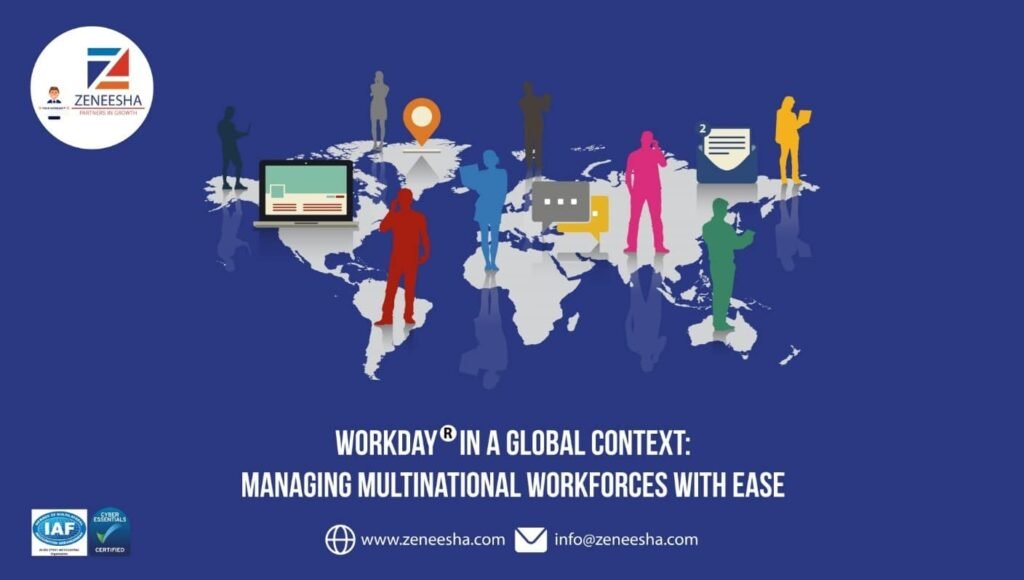
In today’s interconnected world, businesses are transcending borders and operating on a global scale. Managing a multinational workforce comes with unique challenges and opportunities, and this is where Workday, a cloud-based human capital management solution, shines. From ensuring compliance with diverse regulations to optimizing talent utilization across continents, Workday simplifies the complex task of managing multinational workforces with ease.
- Harmonizing HR Practices Across Borders: Workday’s unified platform offers a consistent HR experience regardless of location. From recruitment to performance management, employees and managers worldwide access the same interface and processes. This harmonization fosters a sense of belonging and streamlines communication across cultures.
- Navigating Complex Compliance: With varying labour laws, taxation rules, and employment regulations, maintaining compliance across borders is intricate. Workday’s localized capabilities allow organizations to configure processes and data to meet country-specific requirements, ensuring adherence to diverse legal frameworks.
- Managing Multi-Currency Payroll: Efficiently handling payroll across multiple countries with different currencies is a challenge. Workday’s payroll module provides a centralized platform to process payroll, manage taxes, and handle deductions in various currencies, simplifying the complexities of international compensation.
- Global Talent Acquisition and Development: Identifying and nurturing talent on a global scale is essential. Workday’s recruitment and learning management modules enable organizations to attract, develop, and retain a diverse pool of employees, promoting career growth and innovation across borders.
- Insights for Strategic Decisions: Workday’s analytics empower leaders with insights into workforce trends, performance, and skills. These insights aid in making informed decisions about talent allocation, succession planning, and resource optimization across different regions.
- Seamless Collaboration and Communication: Workday’s social collaboration features bridge geographical gaps, enabling employees to connect, share knowledge, and collaborate across borders. This enhances teamwork and innovation in a globally dispersed workforce.
- Adapting to Local Cultures: Customizing Workday’s interface and processes to reflect local languages and cultural norms enhances user adoption and engagement. This adaptability strengthens the cultural connection between employees and the organization.
- Scalability for Global Growth: As companies expand internationally, they need scalable solutions. Workday’s cloud-based architecture allows organizations to seamlessly add new locations, departments, and users as they grow, without the burden of extensive IT infrastructure.
The workforce is a critical factor in the success of businesses, economies, and societies as a whole. Organizations need to adapt to changes in the workforce landscape and implement strategies to attract, engage, and retain talented individuals while addressing challenges such as skills gaps and changing work dynamics. A multinational company’s success hinges on its ability to effectively manage a diverse and geographically dispersed workforce. Proper management enhances cultural understanding, legal compliance, talent acquisition, innovation, and market responsiveness, contributing to the organization’s competitiveness and growth on a global scale. In a world where diverse teams collaborate seamlessly, Workday emerges as the catalyst for managing multinational workforces. Its user-friendly interface, localized compliance features, and comprehensive HR functionalities empower organizations to transcend geographical boundaries while fostering unity and efficiency. Whether it’s harmonizing HR practices or navigating complex legal landscapes, Workday simplifies the complex task of managing a global workforce, ensuring that multinational organizations can thrive on the international stage.