Talent acquisition refers to the strategic process of identifying, attracting, assessing, and ultimately hiring qualified candidates to fulfill specific job roles within an organization. It encompasses a range of activities aimed at sourcing the right individuals who align with the company’s culture, values, and skill requirements. Talent acquisition goes beyond traditional recruitment, focusing on long-term workforce planning and organizational growth.
Talent acquisition, the process of identifying, attracting and onboarding top-tier talent, stands as a cornerstone of organizational success. Its importance transcends industries and business sizes, impacting growth, innovation, and overall performance.
Importance of optimum Talent Acquisition
Here’s why optimum talent acquisition is crucial:
1. Fuelling Innovation and Growth: Quality talent fuels innovation. Skilled individuals bring fresh perspectives and expertise, driving the development of new products, services, and solutions that lead to business growth.
2. Competitive Advantage: In a fiercely competitive market, having the right people in key positions gives organizations an edge. Exceptional talent drives unique value propositions, setting businesses apart from competitors.
3. Enhancing Team Performance: Talented employees boost team dynamics and performance. Their skills and knowledge elevate collaboration, problem-solving, and overall productivity.
4. Adapting to Change: Optimum talent acquisition ensures organizations can adapt to market shifts and industry changes. A diverse and agile workforce is better equipped to navigate uncertainties.
5. Reducing Turnover Costs: Efficient talent acquisition aligns candidates with the right roles, reducing turnover rates. This saves costs associated with recruitment, training, and lost productivity.
6. Building a Strong Employer Brand: Effective talent acquisition reinforces a positive employer brand. A reputation for valuing employees attracts top talent, making recruitment easier.
7. Maximizing ROI: Investing in the right talent pays off. High-performing employees deliver exceptional value, generating a positive return on investment.
8. Leadership Pipeline: Strategic talent acquisition identifies individuals with leadership potential, ensuring a steady stream of qualified leaders as the organization grows.
9. Cultural Fit: Acquiring talent that aligns with the company culture promotes a cohesive and motivated workforce, boosting employee engagement and retention.
10. Employee Development: Recruiting individuals with growth potential enables organizations to cultivate internal talent, fostering a culture of continuous learning and development.
11. Strategic Workforce Planning: Optimal talent acquisition aligns with long-term workforce plans, ensuring that the organization has the right people in the right roles to meet future demands.
12. Enhanced Customer Experience: Talent directly impacts customer interactions. Engaged and skilled employees deliver superior customer service, enhancing overall customer satisfaction.
Workday is a cutting-edge cloud-based enterprise software platform that revolutionizes how businesses manage their human resources, financial processes, and data analytics. Workday stands as a prominent figure in the software-as-a-service (SaaS) industry, offering a modern and integrated suite of tools to handle various facets of an organization’s operations.
At its core, Workday provides solutions for Human Capital Management (HCM), Financial Management, Payroll Management, Analytics, Recruitment, Learning, and more. Leveraging the power of cloud technology, Workday offers organizations a flexible, accessible, and user-friendly platform to streamline their workforce and financial management.
With a strong emphasis on user experience and continuous innovation, Workday empowers organizations to automate processes, enhance data-driven decision-making, and foster collaboration. Its cloud-native nature ensures that businesses can stay agile and competitive in a rapidly changing business landscape. Regular updates keep the platform in sync with evolving industry trends and customer needs.
Workday’s impact is far-reaching, simplifying complex HR and financial tasks, enabling efficient data analysis, and ultimately contributing to more informed strategies and successful business outcomes.
How Workday has changed HRM
Workday has brought about a transformative shift in the landscape of Human Resource Management (HRM) by introducing a cloud-based, user-centric, and integrated approach. Its impact can be summarized in several key ways:
1. Cloud-Based Technology: Workday’s cloud-based architecture eliminates the need for on-premises software installations and maintenance. This empowers HR professionals and employees to access information, perform tasks, and collaborate from anywhere with an internet connection, fostering a more flexible and remote-friendly work environment.
2. Unified Platform: Workday integrates various HR functions, such as recruitment, onboarding, performance management, benefits administration, and payroll, into a single platform. This unified approach reduces data silos, enhances efficiency, and provides a holistic view of an employee’s journey within the organization.
3. Enhanced User Experience: Workday’s intuitive and user-friendly interface simplifies HR processes. Employees can easily update their personal information, request time off, and access relevant documents, reducing the burden on HR teams and increasing employee satisfaction.
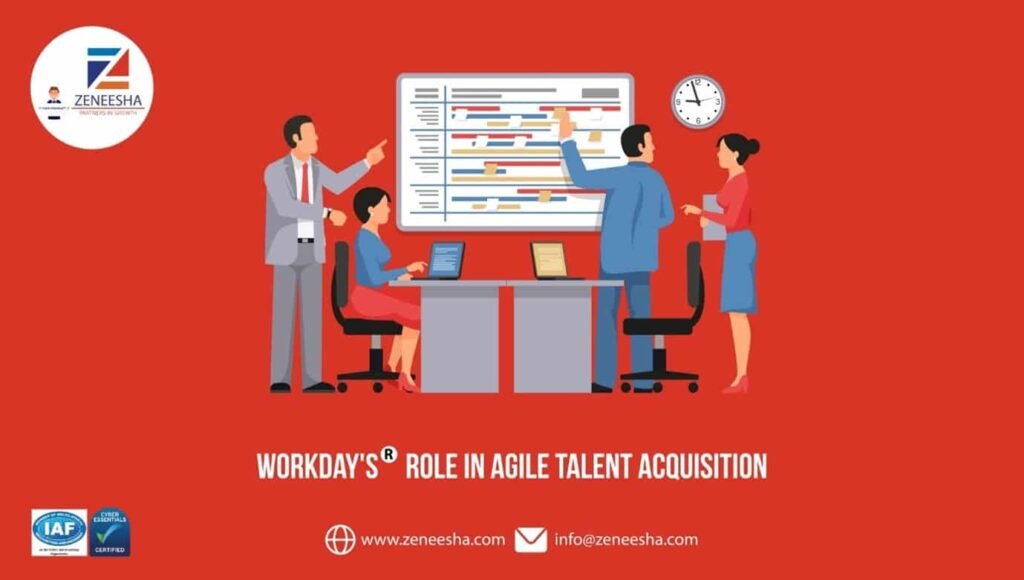
Workday’s Role in Agile Talent Acquisition
Workday plays a crucial role in facilitating Agile Talent Acquisition, a dynamic approach to hiring that aligns with the principles of agility and flexibility. Here’s how Workday supports Agile Talent Acquisition:
1. Rapid and Informed Decision-Making: Workday’s real-time analytics and reporting empower talent acquisition teams with data-driven insights. This allows them to quickly identify trends, assess candidate pipelines, and make informed decisions to adapt to changing hiring needs.
2. Streamlined Recruitment Workflows: Workday automates recruitment workflows, from requisition creation to candidate screening and interview scheduling. This agility ensures that the recruitment process is responsive and adaptable, minimizing bottlenecks.
3. Collaborative Hiring: Workday’s collaborative features enable cross-functional teams to collaborate on candidate evaluations and feedback. This accelerates decision-making and ensures alignment among stakeholders.
4. Continuous Communication: Workday’s cloud-based platform facilitates real-time communication between recruiters, hiring managers, and candidates. This seamless interaction is vital in Agile Talent Acquisition, where quick responses are essential to engage top talent.
5. Data-Driven Candidate Sourcing: Workday’s sourcing tools enable talent acquisition teams to identify candidates who best match the agile needs of the organization. This ensures that the right skills are available at the right time.
6. Adaptive Job Postings: Workday’s recruitment module allows for dynamic job posting adjustments based on emerging project needs. This ensures that job descriptions remain relevant and attract candidates with the desired skills.
7. Agile Onboarding: Workday’s onboarding capabilities ensure that new hires are quickly integrated into agile teams. This reduces the time between hiring and productivity, maximizing the value of talent.
8. Feedback Loops: Workday’s continuous performance management features facilitate ongoing feedback and coaching. This is especially valuable in Agile Talent Acquisition, where quick adaptation and learning are essential.
9. Data-Driven Iteration: Workday’s analytics enable talent acquisition teams to track metrics such as time-to-hire, candidate satisfaction, and quality of hires. This data-driven approach supports iterative improvements in the recruitment process.
10. Talent Pool Management: Workday allows organizations to create talent pools of potential candidates for specific skills or roles. This proactive approach ensures a readily available pool of agile talent when needed.
11. Flexibility in Job Roles: Workday allows for the creation and modification of job roles based on evolving project requirements, enabling organizations to quickly adjust their talent needs.
12. Skill Mapping: Workday’s skills and competency mapping features assist in identifying candidates with the right skills for specific agile projects, ensuring a precise match between roles and skill sets.
13. Shortlisting Efficiency: Workday’s AI-powered tools can help automate the initial screening and shortlisting process, enabling recruiters to focus on engaging with high-potential candidates.
14. Candidate Experience: Workday’s user-friendly interface and mobile app contribute to a positive candidate experience, aligning with the agile principles of customer-centricity.
15. Agile Reporting: Workday’s reporting capabilities offer insights into the effectiveness of agile talent acquisition strategies, helping organizations refine their approaches for better results.
16. Integration with Agile Tools: Workday’s ability to integrate with other agile project management tools ensures a cohesive flow of information between HR and project teams.
17. Talent Pipeline Building: Workday allows organizations to nurture relationships with potential candidates over time, creating a talent pipeline that can be tapped into when needed.
18. Predictive Analytics: Workday’s predictive analytics can forecast talent needs based on project timelines and historical data, supporting proactive talent acquisition strategies.
19. Diversity and Inclusion: Workday’s tools enable organizations to track diversity metrics and ensure that agile teams are inclusive and representative.
20. Iterative Improvement: Workday’s continuous improvement philosophy aligns with agile principles. Organizations can use feedback and data insights to refine their talent acquisition strategies iteratively.
21. Agile Scaling: Workday’s scalability supports organizations in quickly scaling their workforce up or down as project demands change, ensuring optimal resource allocation.
22. Embracing Gig Economy: Workday can help organizations tap into the gig economy by facilitating the hiring of temporary or contract workers for agile projects.
23. Talent Mobility: Workday’s visibility into employees’ skills and aspirations supports internal mobility, allowing for the agile allocation of existing talent to new projects.
24. Compliance and Regulations: Workday ensures that agile talent acquisition practices comply with labour laws and regulations, mitigating legal risks.
In summary, Workday’s cloud-based HRMS empowers organizations to embrace Agile Talent Acquisition by providing the tools and insights needed to adapt quickly to changing talent needs. This dynamic approach aligns talent acquisition strategies with the principles of agility, ensuring that organizations can respond rapidly to market demands and innovation opportunities. Incorporating Workday into Agile Talent Acquisition strategies empowers organizations to navigate rapidly changing business landscapes, tap into the right talent quickly, and effectively manage workforce agility to achieve successful project outcomes.