The Crucial Role of a Competent Workforce in Organizational Success
A competent workforce is the cornerstone of any thriving organization. The significance of having skilled, knowledgeable, and capable employees cannot be overstated. Here’s why a competent workforce is essential for organizational excellence:
1. Driving Innovation: Competent employees bring diverse skills to the table, fostering an environment where innovative ideas flourish. They can think creatively, propose novel solutions, and drive the organization forward.
2. Enhancing Productivity: Competent employees are proficient in their roles, leading to higher productivity levels. Their ability to complete tasks efficiently and accurately reduces waste of time and resources.
3. Delivering Quality Results: Competent employees produce high-quality work, ensuring that products and services meet or exceed customer expectations. This contributes to customer satisfaction and loyalty.
4. Adaptability to Change: A competent workforce is better equipped to adapt to changes in technology, industry trends, and market demands. They can quickly learn new skills and embrace new processes.
5. Effective Problem-Solving: Competent employees possess critical thinking skills and expertise that enable them to analyze complex problems and make informed decisions.
6. Collaboration and Teamwork: Competent employees contribute positively to team dynamics. They can share their knowledge, mentor colleagues, and collaborate effectively to achieve common goals.
7. Employee Morale and Engagement: Competent employees feel more confident and empowered in their roles, leading to higher job satisfaction and engagement.
8. Reduced Turnover Rates: Organizations that invest in developing employee competencies often experience lower turnover rates. Competent employees are more likely to stay with a company that values their growth.
9. Leadership Potential: Competent employees are well-positioned for leadership roles. Their skills and expertise make them effective managers and mentors to their peers.
10. Competitive Advantage: A competent workforce gives organizations a competitive edge in the market. They can outperform competitors by delivering superior products and services.
11. Efficient Training and Onboarding: New employees can learn faster and become productive sooner in a work environment where their peers are competent and supportive.
12. Employee Autonomy and Empowerment: Competent employees require less micromanagement, giving them the autonomy to take ownership of their tasks and contribute to organizational success.
13. Organizational Growth and Resilience: A competent workforce is essential for scaling and adapting to growth opportunities. It helps the organization navigate challenges and thrive in dynamic markets.
Advantages of Workday for Employees
Workday, a leading cloud-based HRMS platform, offers a multitude of benefits that directly enhance the employee experience. From streamlined processes to personalized development, Workday puts employees at the center of their professional journey. Here are the advantages:
1. Self-Service Empowerment: Workday provides employees with self-service access to their personal information, allowing them to update details, view pay statements, and manage benefits at their convenience.
2. User-Friendly Interface: Workday’s intuitive interface ensures that employees can easily navigate the platform, making tasks like requesting time off or accessing training materials hassle-free.
3. Personalized Learning Paths: Workday Learning tailors learning journeys based on individual roles, skills, and goals, empowering employees to upskill and advance their careers.
4. Performance Visibility: Employees can set goals, track progress, and receive feedback within Workday Performance Management, fostering continuous growth and improvement.
5. Transparent Compensation: Workday provides visibility into compensation, ensuring employees understand their pay structure and enabling informed discussions with managers.
6. Seamless Collaboration: Workday fosters collaboration by enabling employees to collaborate on projects, share feedback, and contribute to team discussions within the platform.
7. Mobile Accessibility: Workday’s mobile app ensures that employees can access their HR information, submit requests, and engage in learning from anywhere, enhancing flexibility.
8. Career Development Opportunities: Workday supports career growth by suggesting personalized development paths, making it easier for employees to align their aspirations with available opportunities.
9. Clear Benefits Information: Employees can access comprehensive benefits information, making it easier for them to understand and make informed decisions about their healthcare and retirement plans.
10. Enhanced Work-Life Balance: Workday’s self-service capabilities for tasks like requesting time off or remote work arrangements help employees achieve a better work-life balance.
11. Feedback and Recognition: Employees can provide and receive feedback, fostering a culture of recognition and continuous improvement.
12. Data Privacy and Security: Workday maintains high standards of data security and privacy, ensuring that employees’ sensitive information remains protected.
13. Employee Surveys and Insights: Workday enables organizations to gather feedback through employee surveys, helping them understand employee sentiments and make data-driven decisions.
14. Personalized Communication: Workday enables personalized communication, ensuring employees receive relevant updates, announcements, and reminders.
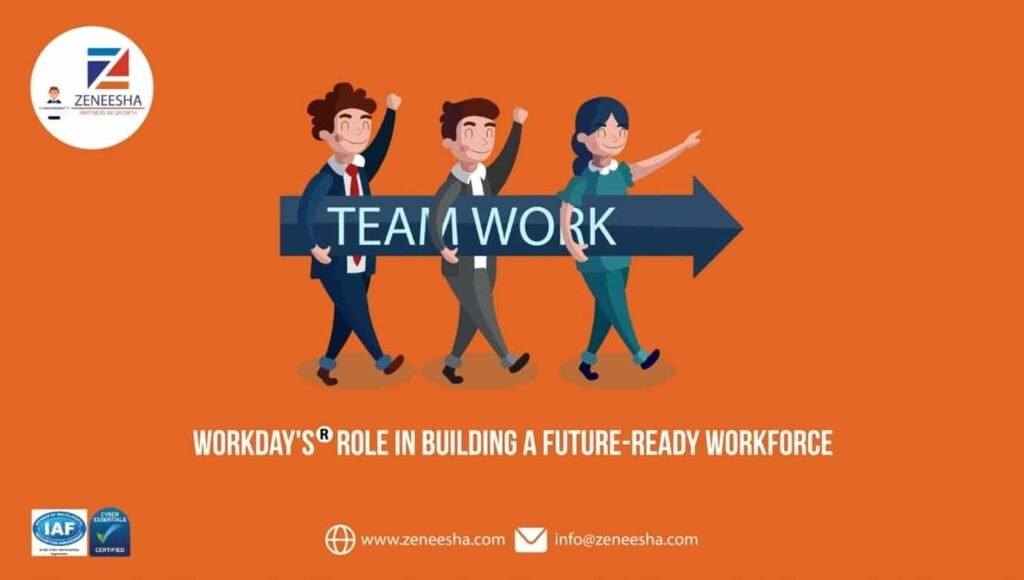
Building a Future-Ready Workforce with Workday
In an era of constant change, organizations must equip themselves with a future-ready workforce to navigate uncertainties and seize opportunities. Enter Workday, a catalyst in transforming traditional work models into dynamic, adaptable structures. Here’s how Workday shapes a future-ready workforce:
1. Agile Learning and Development: Workday Learning enables continuous upskilling, keeping employees equipped with the latest skills to excel in rapidly evolving industries.
2. Personalized Growth Journeys: Workday identifies individual career paths and development opportunities, empowering employees to align their aspirations with organizational needs.
3. Data-Driven Decision-Making: Workday’s analytics provide insights into workforce trends, enabling organizations to make informed decisions on talent acquisition, development, and retention.
4. Remote Work Enablement: Workday supports remote work arrangements, fostering flexibility and ensuring seamless collaboration even in distributed teams.
5. Succession Planning: Workday’s talent management capabilities aid in identifying and nurturing potential leaders, ensuring a pipeline of skilled individuals to fill critical roles.
6. Diverse and Inclusive Culture: Workday helps organizations promote diversity and inclusion by enabling unbiased talent management and data-driven hiring decisions.
7. Employee Engagement and Well-Being: Workday enhances employee experiences, supporting well-being initiatives and promoting a positive, engaging work environment.
8. Adaptive Workflows: Workday’s workflows can be quickly modified to accommodate new processes, ensuring agility in response to changing business requirements.
9. Strategic Workforce Planning: Workday facilitates long-term workforce planning by providing insights into talent gaps and assisting in aligning talent strategies with business goals.
10. Continuous Performance Management: Workday encourages ongoing feedback and coaching, fostering a culture of improvement and agility in addressing performance gaps.
11. Embracing Digital Transformation: Workday’s cloud-based platform prepares employees for digital change by promoting familiarity with modern tools and technologies.
12. Talent Mobility and Retention: Workday identifies opportunities for internal mobility, reducing the need for external hiring and enhancing employee loyalty.
13. Enhanced Employee Experience: Workday’s user-friendly interface and self-service capabilities contribute to an enjoyable employee experience, boosting engagement.
14. Data Security and Compliance: Workday ensures that HR processes align with data protection regulations, securing employee information and privacy.
15. Remote Onboarding: Workday facilitates remote onboarding, ensuring that new hires quickly integrate into the organization regardless of their location.
16. Skills Mapping and Alignment: Workday’s skills mapping capabilities help organizations align employee skills with business goals, ensuring a workforce ready for emerging needs.
17. Predictive Analytics: Workday’s predictive analytics identify trends and potential challenges in workforce dynamics, aiding proactive decision-making.
18. Collaborative Learning: Workday enables collaborative learning through social features, fostering knowledge sharing and cross-functional collaboration.
19. Global Workforce Management: Workday supports multi-location teams with localized compliance and HR practices, ensuring a consistent and compliant global workforce.
20. Change Management Support: Workday assists in change management initiatives, helping employees adapt to new processes, technologies, and work environments.
21. Talent Marketplace: Workday facilitates internal gig work, enabling employees to contribute to projects outside their primary roles, fostering a culture of agility.
22. Employee Feedback Loop: Workday’s tools gather employee feedback and sentiments, guiding HR strategies and ensuring workforce satisfaction.
23. Continuous Monitoring: Workday enables real-time tracking of employee performance and growth, allowing for timely interventions and course corrections.
24. Reskilling and Career Transitioning: Workday aids in reskilling employees whose roles become obsolete, promoting a workforce equipped for industry shifts.
25. Future-Proofed Workflows: Workday’s flexible workflows anticipate future process changes, accommodating new requirements and keeping HR practices future-ready.
26. Reducing Administrative Burden: By automating routine HR tasks, Workday frees HR professionals to focus on strategic initiatives that shape a forward-looking workforce.
27. Cross-Generational Adaptability: Workday’s user-centric design appeals to different generations, ensuring technology adoption across age groups.
28. Measurable ROI: Workday’s impact on workforce agility, engagement, and productivity can be quantified, demonstrating its value in building a future-ready organization.
In conclusion, Workday transforms the employee experience by offering a user-friendly, engaging, and empowering platform. It brings together essential HR functions, learning opportunities, and career development, contributing to higher engagement, growth, and overall job satisfaction. As the workforce landscape evolves, Workday emerges as an enabler of transformation, ensuring organizations are equipped with agile, skilled, and engaged employees ready to navigate the challenges and opportunities of the future. As a transformative force, Workday propels organizations toward a future-ready workforce, where adaptability, skill diversity, engagement, and innovation drive success. It’s more than a platform; it’s a strategy for thriving in tomorrow’s business landscape.