Importance of organisational resilience
Organizational resilience is a critical factor in the long-term success and sustainability of any business. It refers to an organization’s ability to adapt, recover, and thrive in the face of challenges, disruptions, or crises. Here are some key reasons why organizational resilience is important:
- Adaptability to Change: In today’s rapidly evolving business environment, change is constant. Organizations that are resilient have the capacity to adapt quickly to new market trends, technologies, and customer preferences. This adaptability allows them to stay competitive and seize new opportunities.
- Effective Risk Management: Resilient organizations are better equipped to identify, assess, and mitigate risks. They have robust risk management strategies in place to anticipate and respond to potential threats, whether they be economic, operational, or external factors like natural disasters or geopolitical events.
- Enhanced Decision-Making: Resilience is built on a foundation of data-driven decision-making and scenario planning. Organizations that prioritize resilience have access to real-time data, analytics, and forecasting tools that enable them to make informed choices, even in uncertain circumstances.
- Maintaining Business Continuity: Organizational resilience ensures that critical business functions can continue operating, even during disruptions. This includes having contingency plans, redundant systems, and clear communication channels in place to minimize downtime and maintain essential operations.
- Employee Well-Being and Engagement: Resilience extends to the well-being and engagement of employees. A resilient organization prioritizes the physical and mental health of its workforce. It offers support systems, resources, and a positive work environment that fosters employee loyalty, productivity, and retention.
- Customer Trust and Reputation Management: A resilient organization builds trust with its customers and stakeholders by demonstrating reliability and a commitment to meeting their needs, even in challenging times. This trust is a valuable asset that can bolster reputation and brand loyalty.
- Regulatory Compliance and Governance: Resilient organizations have strong governance structures and compliance protocols in place. They understand and adhere to legal and regulatory requirements, reducing the risk of penalties or legal issues that could negatively impact the business.
- Sustainability and Longevity: Resilient organizations are built for the long haul. They have a strategic focus on sustainability, both in terms of environmental responsibility and the ability to sustain growth, profitability, and positive impact over time.
What is Workday?
Workday is a cloud-based enterprise software platform that provides a wide range of human resources (HR) and financial management solutions. It is designed to streamline various business processes, including HR, payroll, benefits, talent management, finance, and more.
Here are some key features and aspects of Workday:
- Cloud-Based Platform: Workday is a Software as a Service (SaaS) solution, which means it is hosted and accessed through the cloud. This allows for easy accessibility from any device with an internet connection.
- Unified System: Workday offers a unified suite of applications that cover HR, finance, and other critical business functions. This integration allows for seamless data flow and real-time visibility across different departments.
- Integration Capabilities: Workday is designed to integrate with other enterprise systems, allowing for seamless data exchange between different applications and platforms.
- Security and Compliance: Workday places a strong emphasis on data security and compliance. It includes features like role-based access controls, data encryption, and regular security updates to protect sensitive information.
- Continuous Innovation and Updates: Workday is known for its regular updates and continuous innovation. This ensures that organizations have access to the latest features, functionalities, and compliance requirements.
- Community and Support: Workday has a robust user community, providing a platform for users to share best practices, ask questions, and access resources. Additionally, Workday offers various support options to assist organizations in their implementation and ongoing use of the platform.
How Workday manages organisation crisis?
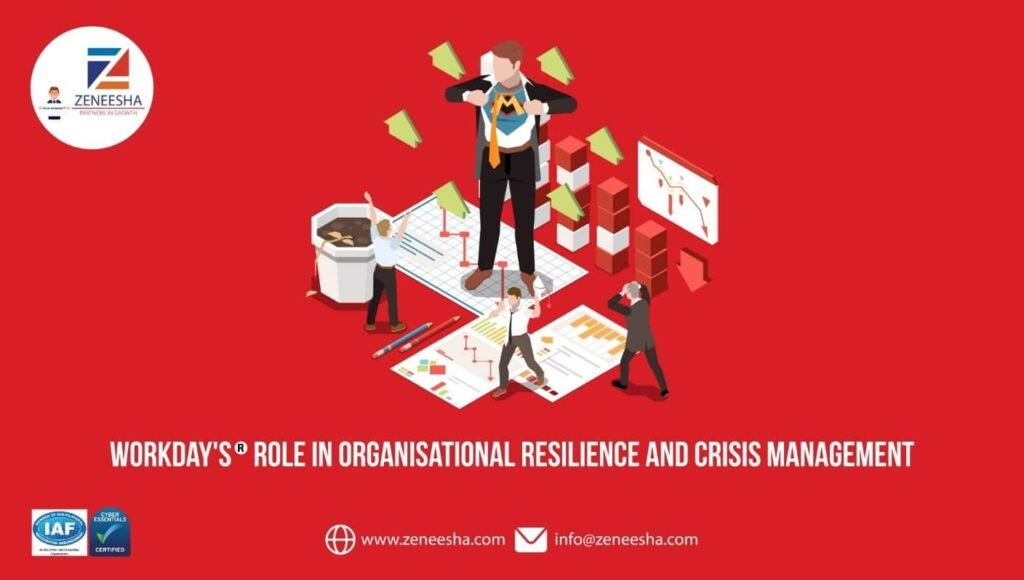
Workday plays a crucial role in organizational resilience and crisis management by providing the tools and capabilities needed to navigate and respond effectively to disruptions and challenges. Here are several ways Workday contributes to organizational resilience:
- Centralized Data and Communication: Workday serves as a centralized platform for HR and financial data. In times of crisis, having all essential information in one place enables quick access and informed decision-making. It also facilitates clear communication with employees regarding policies, procedures, and updates.
- Remote Work Enablement: Workday’s cloud-based nature allows for remote access, enabling employees to continue essential HR functions and access critical information from anywhere with an internet connection. This is especially important during times of crisis when remote work becomes necessary.
- Talent Management and Workforce Planning: Workday’s talent management features assist in identifying critical skills and competencies within the organization. This information is invaluable in times of crisis, as it helps in making informed decisions about workforce redeployment, retraining, or restructuring.
- Payroll Continuity and Benefits Administration: Workday’s payroll and benefits administration capabilities ensure that employees continue to receive their compensation and benefits accurately and on time, even during challenging periods. This contributes to employee well-being and stability.
- Scenario Planning and Modeling: Workday’s reporting and analytics tools allow organizations to perform scenario planning. This involves modelling different situations and their potential impact on the workforce, finances, and operations. This information is essential for making proactive decisions in a crisis.
- Compliance and Regulatory Support: Workday helps organizations stay compliant with changing regulations and legal requirements, which is particularly critical during times of crisis when regulatory environments may shift rapidly.
- Employee Wellness and Assistance Programs: Workday can track employee well-being, including health and safety concerns. This information can be used to implement wellness programs, provide resources for mental health support, and ensure the physical and emotional well-being of employees.
- Change Management and Communication Plans: Workday’s communication tools can be instrumental in disseminating important information to employees, stakeholders, and partners. This includes updates on crisis management plans, changes in policies, and resources available to support employees.
- Audit Trails and Compliance Documentation: Workday’s audit trails provide a detailed record of all activities and changes made within the system. This documentation is crucial for compliance, regulatory reporting, and post-crisis analysis.
- Workforce Mobility and Flexibility: Workday’s cloud-based platform allows for easy scalability and adaptability to changing workforce needs. This flexibility is crucial during crises when organizations may need to rapidly adjust their workforce size or structure.
- Succession Planning and Knowledge Retention: Workday’s talent management capabilities include succession planning, which helps identify and develop future leaders within the organization. This ensures that critical roles can be filled in times of unexpected vacancies.
- Real-Time Analytics for Informed Decision-Making: Workday’s reporting and analytics tools provide real-time insights into workforce metrics, financial data, and performance indicators. This enables organizations to make data-driven decisions quickly, especially in response to rapidly evolving situations.
- Business Continuity Planning: Workday supports business continuity planning by providing a platform for organizations to define and document their contingency plans. This includes processes for maintaining essential operations and services during disruptions.
- Vendor and Supply Chain Management: Workday’s procurement and supply chain features help organizations manage vendor relationships and supply chain operations. This is vital in times of crisis when ensuring a stable supply of essential goods and services is critical.
- Crisis Communication Planning and Execution: Workday’s communication tools and document management capabilities can be used to develop and execute crisis communication plans. This ensures that employees and stakeholders receive timely and accurate information during emergencies.
- Incident Tracking and Reporting: Workday allows organizations to track and report on incidents or disruptions that occur within the workforce. This data can be used for post-crisis analysis and to implement improvements in future crisis response efforts.
- Resource Allocation and Cost Management: Workday’s financial management module aids in resource allocation and cost management during crises. It enables organizations to efficiently allocate budgetary resources to critical areas and track expenses related to crisis management efforts.
- Regulatory Compliance Monitoring: Workday helps organizations stay updated with evolving regulatory requirements, ensuring that they remain in compliance even during challenging times. This minimizes the risk of legal and compliance issues arising during a crisis.
- Crisis Simulation and Preparedness Training: Workday can be utilized to facilitate crisis simulation exercises and training programs. This helps prepare employees and leaders to respond effectively in real-world crisis situations.
- Crisis Simulation and Preparedness Training: Workday can be utilized to facilitate crisis simulation exercises and training programs. This helps prepare employees and leaders to respond effectively in real-world crisis situations.
In summary, organizational resilience is not just about bouncing back from challenges; it’s about thriving in the face of adversity. It’s a strategic imperative that enables businesses to navigate uncertainties, seize opportunities, and ultimately, ensure their long-term success and impact. Workday is widely used by organizations of various sizes across different industries to streamline their HR and financial management processes, ultimately improving efficiency and driving business success. Workday provides a robust platform that supports organizations in maintaining stability, ensuring employee well-being, and making informed decisions during challenging times.